
Directional speakers
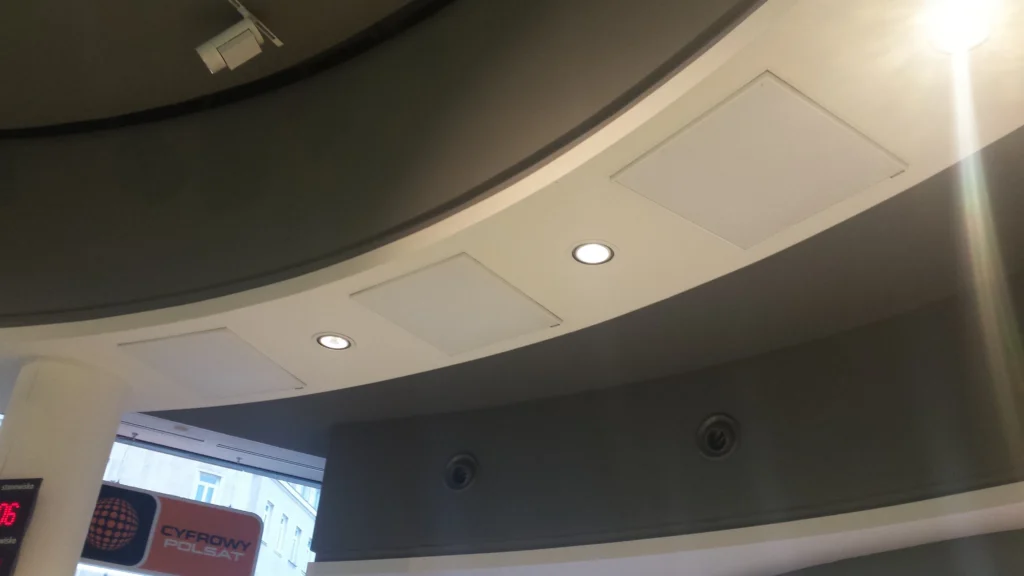
━ Sound precision in modern systems
In a world where audio announcements often turn into disruptive noise, directional speakers offer a groundbreaking solution. They allow sound to be precisely directed at a specific listener without disturbing those nearby. At Tonex, we specialize in designing systems where directional speakers play a key role in creating a unique atmosphere in public and commercial spaces.
Innovative sound systems for museums and galleries
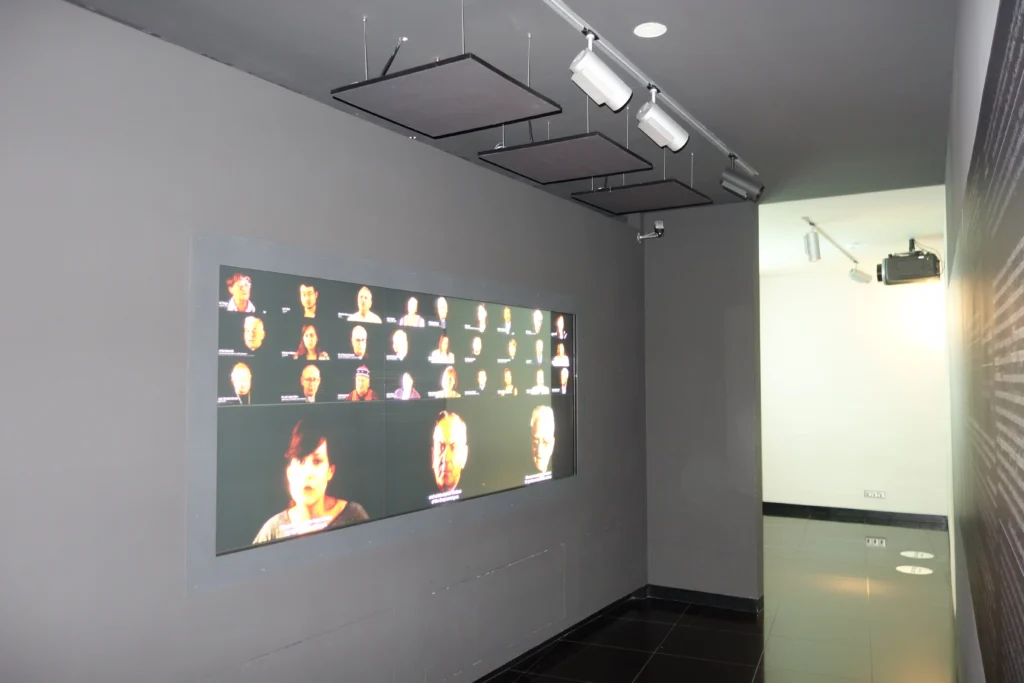
Modern sound systems for museums require solutions that allow multiple audio tracks to coexist within a single exhibition hall. Thanks to focused sound technology, directional speakers create “sound islands.” Visitors hear the narrator’s commentary or sound effects only when they are standing directly in front of a given exhibit.
Our experience in this field is confirmed by projects in the most prestigious venues in Poland and Europe:
- The POLIN Museum of the History of Polish Jews in Warsaw – where sound precisely supports the historical narrative.
- The Krakow Salt Works Museum in the Wieliczka Salt Mine – the use of directionality in the challenging acoustic conditions of the underground.
- The John Paul II Museum in Wadowice – systems that build an emotional connection with the visitor.
- VZW Biermuseum Brugge – an international implementation of advanced audio systems.
- The Rock History Museum in Jarocin – creating an intimate narrative about the history of Polish music
- The Field Ordinariate Museum in Warsaw – speakers create a subtle atmosphere for stories of repression and persecution.
The Use of Directional Speakers in Business and Retail
Professional sound systems based on directional technology are also revolutionizing the retail and banking sectors. Directional speakers allow for the personalization of marketing messages at store shelves or ensure discretion in customer service areas.
We implement these solutions for market leaders, ensuring the highest quality of transmission:
- IKEA stores throughout Poland – use of directional sound for targeted communication with customers.
- Deutsche Bank branches – use of directional speakers in the bank’s television network
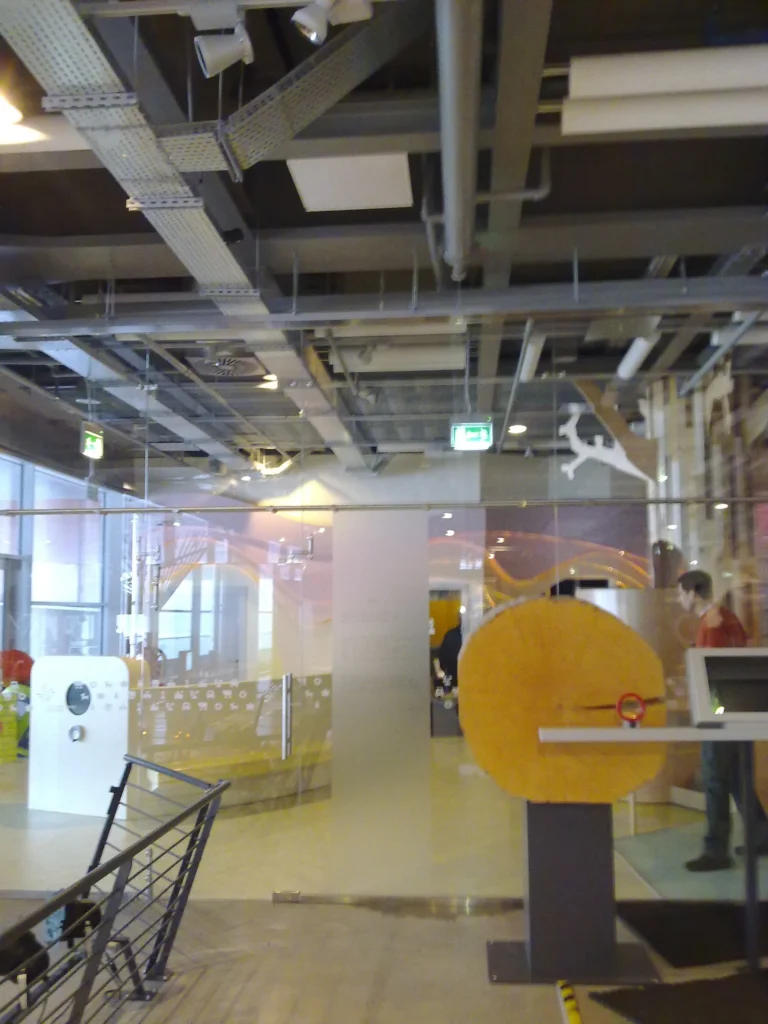
Copernicus Science Center – interactive stations where sound follows the user’s actions. - Expo in Milan – sound in designated presentation zones of the Polish pavilion.
- Art Box Experience at Fabryka Norblina in Warsaw – personalized narration within the general sound system area
By choosing a directional speaker from Tonex, you are investing in sound systems that combine engineering precision with a commitment to acoustic comfort in the environment.
Frequently Asked Questions About Directional Speakers
How does a directional speaker actually work, and can you hear it from the side?
Unlike traditional speakers, which emit sound in all directions, a directional speaker creates a narrow, focused beam of sound waves with a dispersion angle of just a few degrees. This can be compared to a shower where the water falls only on the person using it (“Soundshower”). A person standing just a step away hears only the sounds reflected from the surface onto which the sound waves are directed. This allows for the creation of separate audio zones right next to each other.
At what height should a directional speaker be mounted?
The optimal mounting height depends on the model and the desired coverage, but it is usually between 2.5 and 4 meters. Very high or distant mounting is also possible due to the narrow dispersion angle.
The sound level 10 meters from the speaker is only slightly lower than that right next to the device. The best results are achieved with ceiling mounting, directing the sound beam vertically downward. In museums and galleries, this allows for the creation of an ideal “sound bubble” directly above a selected exhibit.
Does the sound from the directional speaker bounce off the walls?
Yes, sound waves from directional speakers behave similarly to light. If the beam hits a hard, smooth
surface, such as glass, concrete, or marble, it will be reflected. At Tonex, we either use this phenomenon intentionally (e.g., to create a “sounding wall”) or eliminate it by precisely adjusting the device’s angle of inclination.
Can directional speakers work with motion sensors?
Absolutely. It’s one of the most popular solutions in modern museums. The audio plays automatically only when a visitor enters the area in front of the exhibit. This enhances the element of surprise, reduces wear and tear on the equipment, and makes the exhibition fully interactive.
Do I need specially prepared recordings for a directional speaker?
No, these systems play standard audio files, such as MP3s and WAVs. However, it’s worth noting that directional speakers are extremely precise and perform best with the human speech range and high frequencies. When preparing recordings, it’s important to ensure the source is of high quality, as this technology highlights any imperfections in the sound.
What are the main benefits of using directional speakers in an office or bank?
The key benefits are privacy and noise reduction. In bank branches, they serve as a privacy solution, ensuring that customers waiting to be served hear music
rather than the conversations taking place while other customers are being served. In open-plan offices, they allow announcements or background music to be played in specific relaxation areas without distracting people working at nearby desks.