
Multimedia Design and Installation
━ A New Dimension in Storytelling
Revolution in Exhibitions: Why Modern Institutions Rely on Multimedia
Museums used to be associated with silence, dust, and a “do not touch” sign. Today, these institutions are undergoing a revolution. Multimedia installations in museums have become a new language for communicating with visitors. Why is this so important? Because multimedia allows us to show the invisible – historical processes, destroyed buildings, or the emotions of people who are no longer with us. Through multimedia, education becomes entertainment at the highest level, attracting younger generations accustomed to digital interaction.
Immersion and Interaction as the Foundation of Modern Museum Education
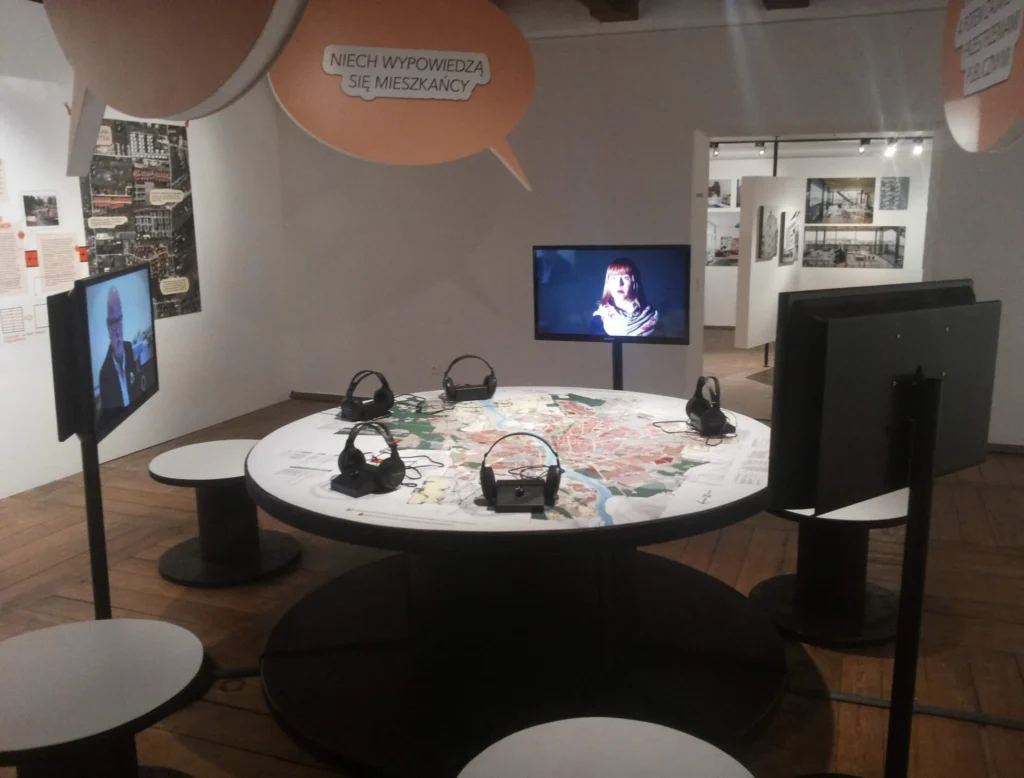
Did you know that humans remember only 10% of what they read but up to 90% of what they do or participate in? This is the foundation of modern museum education. Interactive tables, touch screens, and motion-responsive systems turn visitors into explorers rather than passive observers. In our projects, we focus on intuitiveness – technology is meant to support the story, not overwhelm it.
The Psychology of Perception: How Technology Captures and Holds Visitor Attention
As humans, we are naturally programmed to respond to movement and sound. At Tonex, we leverage this by designing systems that subtly guide visitors through the exhibition. Proper lighting, dynamic visuals, and surrounding audio create a state of “full immersion” in the visitor’s brain. It’s the moment when the outside world disappears, and only the present – the story we are discovering – matters.
Tonex Expertise: Designing AV Systems from Vision to Precision
Every major installation starts with a blank page and a conversation with the exhibition curator. Multimedia design and installation is an extremely complex process. We have to merge artistic vision with hard technical parameters. How should projectors be positioned to avoid blinding visitors? How do you route kilometers of cables in a historic building without damaging its structure? These are questions we answer daily, creating documentation that serves as a roadmap for the success of the entire project.
Sound Systems for Museums – Audio Architecture That Shapes Atmosphere
Sound is half the experience. You can have the most beautiful visual display, but if the audio is weak, the magic disappears. Professional museum sound systems require a completely different approach than concert or home audio. Precision and placement are key. Sound must reach exactly where it is needed and at the right intensity so as not to interfere with other multimedia stations. At Tonex, we treat audio as the connective tissue that unifies the entire exhibition into a coherent whole.
Directional Speaker: Innovative Audio Discretion Without Headphones
This is our “ace up the sleeve.” Imagine standing in front of a portrait and hearing a whisper narrating its story. Take a step aside and… silence. This is made possible by the directional speaker technology. It allows us to create dozens of audio zones in a single open hall without using headphones, which are often unhygienic or uncomfortable for visitors. Elegance and technology in one solution.
Technologies for Special Tasks:
Case Studies of the Most Demanding Installations
Extreme Conditions 130 Meters Underground: Wieliczka Salt Mine
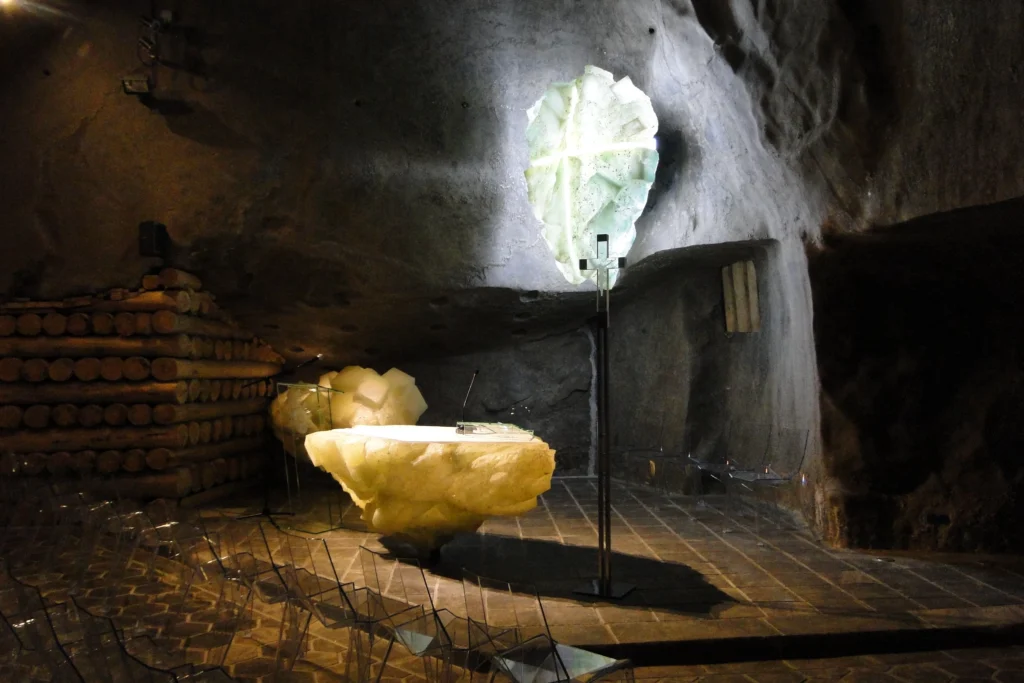
Our work is rarely boring, but the project in the Wieliczka Salt Mine was a true test of character. Imagine installing advanced electronics 130 meters underground. It’s an environment where everything wants to destroy your work – ubiquitous salt, humidity reaching 80%, and a unique microclimate. We had to design systems with unprecedented durability so that multimedia could delight tourists from all over the world for many years to come.
Engineering Challenges: Microclimate, Salt, and Advanced DSP Processors
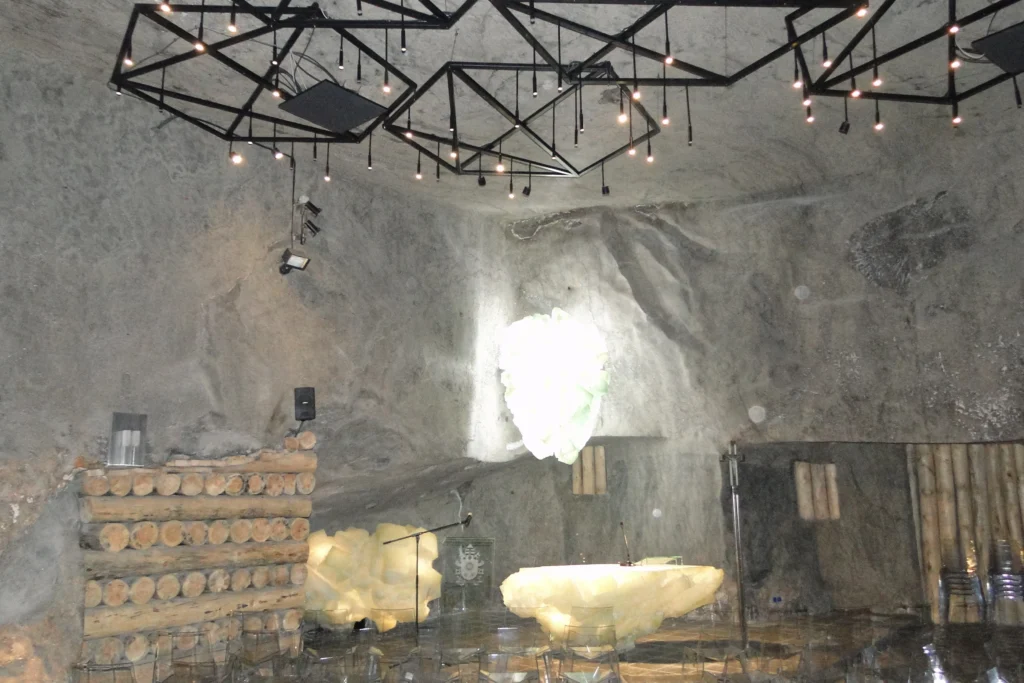
In Wieliczka, there was no room for standard solutions. Every enclosure and connector had to be resistant to salt corrosion. We implemented specialized DSP processors and directional speaker arrays that “propagate” sound exactly where it is needed, eliminating unwanted reflections. An automatic control system triggers the narrative that guides visitors through the story of the creation of the world.
Prestige Awarded with a Medal: Museum in Wadowice
Some projects carry not only a technical dimension but also a spiritual one. For our work at the John Paul II Museum in Wadowice, the company owner, Andrzej Onuch, was awarded the Bronze Papal Medal. This is a great honor for us and proof that our multimedia design and installations are at the highest global standard.
From Warsaw to Tel Aviv: Tonex’s International Project Reach
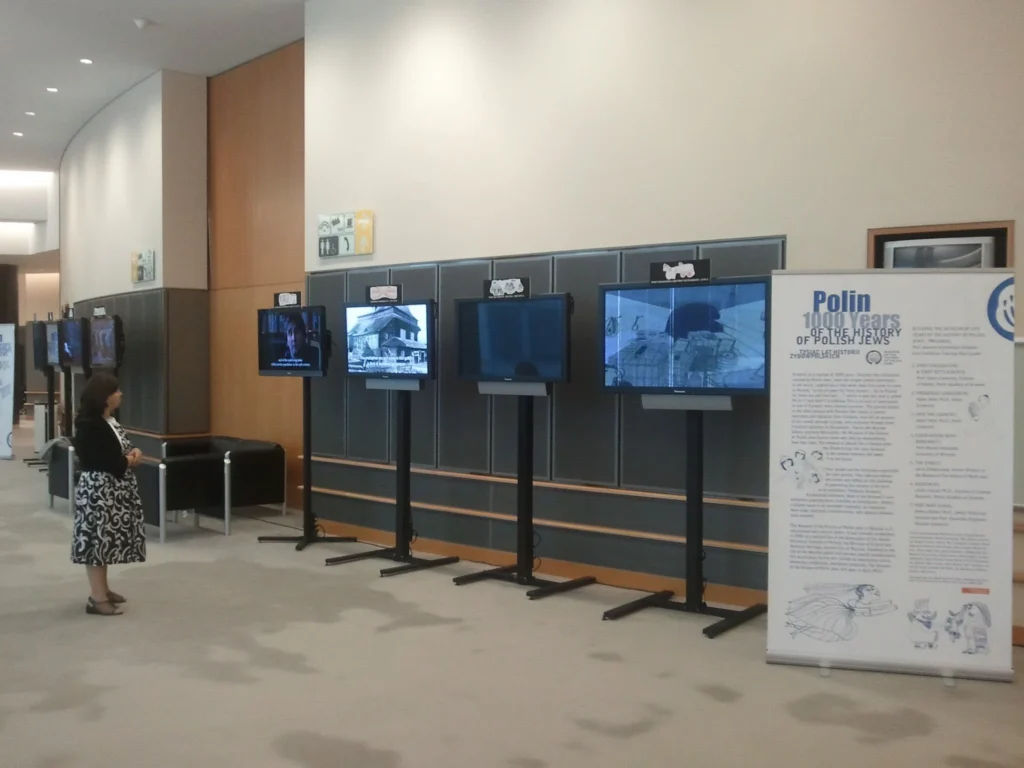
Our experience extends beyond the borders of Poland. We have co-created installations in such significant locations as the POLIN Museum of the History of Polish Jews in Warsaw and the exhibition “1000 Years of Jewish History in Poland” in Tel Aviv and Krakow. Each of these projects required us to understand a different culture and narrative style, demonstrating that Tonex can adapt the language of technology to meet global standards.

Interactive Presentation Systems: 3D Mapping and Holograms
In a modern museum, the visual experience cannot be static. Multimedia installations often involve large-scale projections that transform the interior architecture. We use 3D mapping to bring models of old cities to life, as well as holograms that add a touch of “magic,” capturing the attention of both children and adults. Motion tracking systems (Kinect, LiDAR) allow visitors to physically influence what they see on the screen.
Service, Monitoring, and Stability of Control Systems
Building the installation is only the beginning. Museums operate intensively, often seven days a week, so at Tonex we place great emphasis on service and remote monitoring of systems. Our solutions allow the curator to activate the entire exhibition with a single button on a tablet or smartphone. We also ensure security – the systems are isolated from public networks, guaranteeing continuous operation even in the event of a power outage.
Frequently Asked Questions About Multimedia and Sound Systems in Museums
Does every exhibition need advanced multimedia?
Not everyone, but most people will benefit from it. What matters is moderation and purposefulness in every multimedia installation.
What is the lifespan of professional laser projectors?
Modern projectors offer 20,000 to 30,000 hours of operation without the need to replace the light source.
Can directional speakers be installed in any room?
Yes, but they require precise adjustment and measurements to achieve the best sound focus.