Hearing aid systems and diagnostics
━ The foundation of a barrier-free world
Information and Communication Accessibility in 2026
We live in a time when accessibility is no longer a polite request but a legal and civil requirement. In 2026, public space design standards have evolved. Today, a building without a hearing loop is as incomplete as a building without wheelchair access. But it’s not just about the law – it’s about dignity. A hearing loop for people with hearing impairments is a tool that allows a student at UKSW to hear a lecture, and a senior in a church to understand every word of the homily. At Tonex, we are proud to have been setting these standards in Poland for years.
Hearing Loops for the Hearing Impaired – What Exactly Are They?
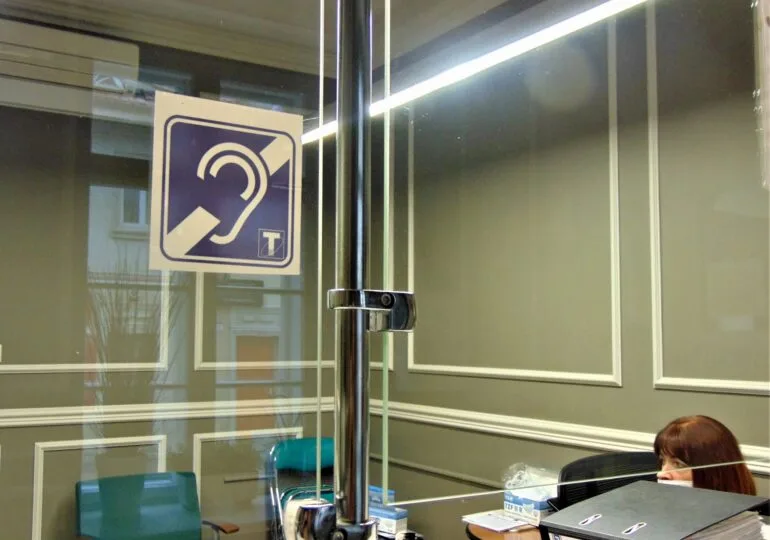
Sounds complicated? Don’t worry, it’s simple! A hearing loop for the hearing impaired is a system that transmits sound directly to the user’s hearing aid, completely bypassing surrounding noise. There’s no need to borrow headphones or configure anything. The user enters the loop’s range, switches their hearing aid to “T” mode, and suddenly hears the speaker’s voice crystal-clear. It’s the simplest, most hygienic, and most effective way to overcome architectural communication barriers.
How Does a Hearing Loop Work? Physics in the Service of Empathy
From a technical standpoint, the system consists of a special hearing loop amplifier and a copper wire arranged in a loop around the room or under a reception desk. The amplifier takes the signal from a microphone and converts it into a magnetic field. This field spreads inside the loop and is “picked up” by a tiny coil in the hearing aid. The result? Sound reaches the brain without distortion, echoes, or background noise from air conditioning.
The T-Coil in Hearing Aids: The Key to Clear Reception
The telephone coil, known as the “T-coil,” is found in most modern hearing aids and speech processors in cochlear implant users. When the Tonex system emits a magnetic field, this coil converts it back into an electrical signal, which the hearing aid processes into sound. This brilliantly simple solution makes loop-based hearing assistance systems universally compatible worldwide.
Induction Loops: Room Loops vs. Counter Loops – Where to Use Each?
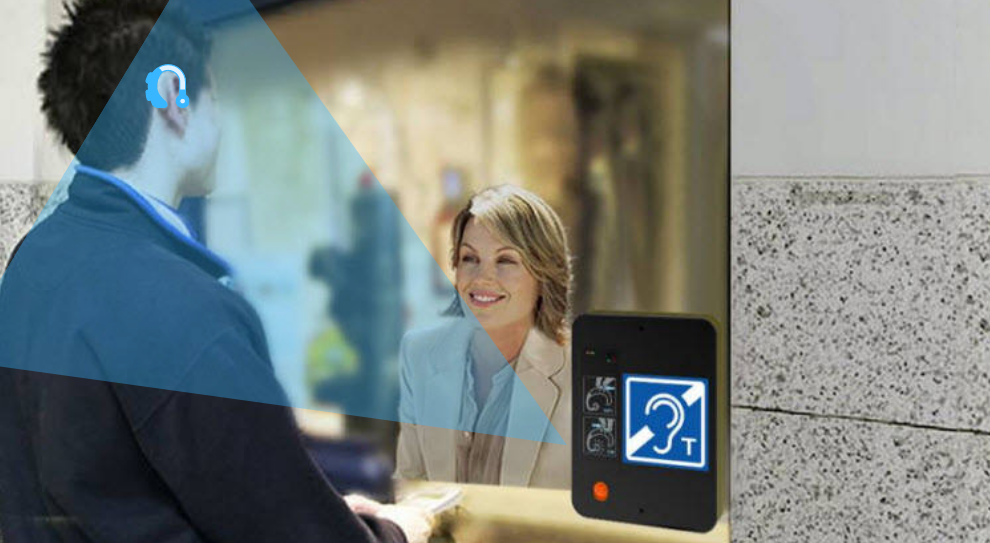
At Tonex, we don’t believe in “one-size-fits-all” solutions. A hearing loop must be tailored to the function of the space. In large conference rooms, university lecture halls, or churches, we use room loops that cover the entire area. In banks, pharmacies, or information desks, we install counter loops. These allow discreet face-to-face communication without broadcasting sound across the entire office, which is crucial for maintaining data privacy.
Why Hearing Loops Beat FM and IR Systems
Radio (FM) or infrared (IR) systems require the user to go to a reception desk, show identification, and borrow an external receiver with headphones. Many hearing-impaired users feel awkward doing this and simply avoid it. Hearing loops are completely discreet and hands-free. They do not stigmatize the user, providing a significant psychological and functional advantage.
UKSW and UW: Accessibility Standards at Polish Universities
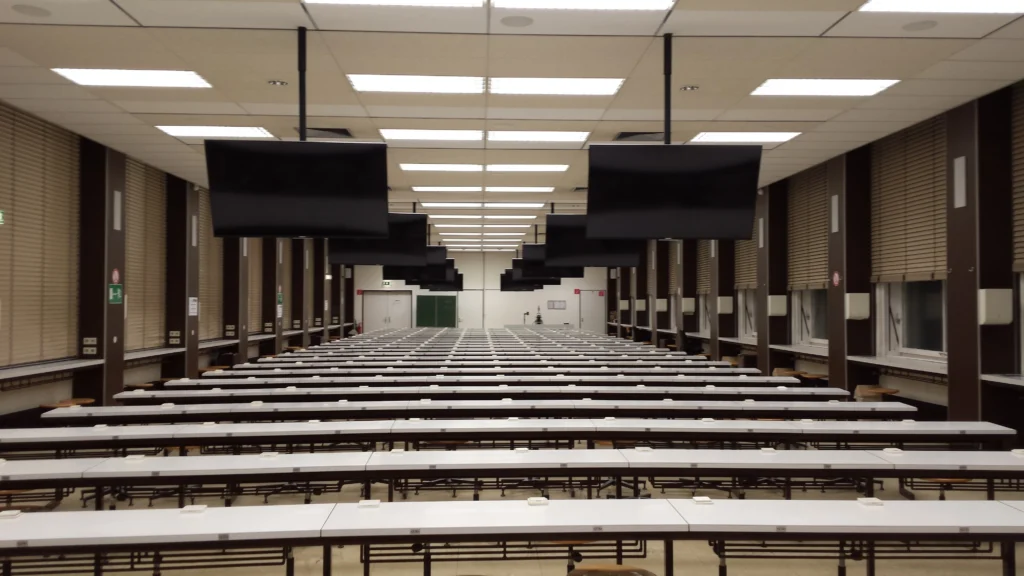
Higher education is an area where we consider ourselves experts. We have collaborated with leading universities in Poland and abroad, such as the University of Warsaw, UKSW, and the University of Music in Vienna. Our hearing assistance systems installed at these institutions give students equal opportunities to acquire knowledge. There is nothing more satisfying for an engineer than seeing a student with a hearing aid fully participating in a lively academic discussion in a lecture hall with challenging acoustics.
Collaboration with the Society for the Assistance of the Deafblind and Special Educational Center No. 15
Our credibility stems from years of collaboration with organizations that best understand the needs of hearing-impaired individuals. We have provided wireless hearing assistance systems for the Society for the Assistance of the Deafblind and the Special Educational Center for Hearing-Impaired Children No. 15 in Warsaw. This collaboration taught us that in this field, there is no room for equipment compromises. Every decibel and every Hertz matters for speech comprehension.
Acoustic Measurements: Don’t Design in the Dark
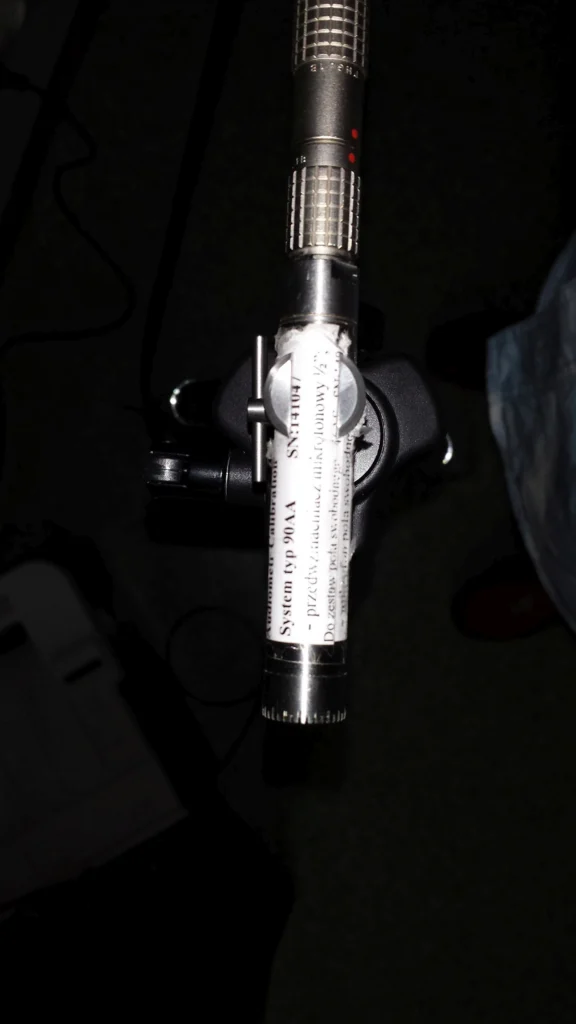
Did you know that even the most expensive hearing loop will not work properly in a room with strong electromagnetic interference or excessive reverberation? That’s why at Tonex, we start with diagnostics. Acoustic measurements are the foundation of every good project. We check background noise levels, reverberation time, and the acoustic insulation of partitions. Only then do we select the appropriate amplifier and method for laying the wiring.
When Does Your Space Require Professional Expertise?
Always before the handover of a building, after renovation, or when planning to install a sound system. It often happens that employees in open-plan offices complain about noise fatigue. Our acoustic measurements help identify the source of the problem and propose solutions such as acoustic panels or sound masking systems, which effectively improve workplace comfort.
Acoustics in Healthcare: Hospitals and Specialized Institutes
In medical facilities, acoustic measurements are often a matter of safety. Noise in hospitals is not just a discomfort – it increases patient stress levels and reduces staff focus. We specialize in measurements for the most demanding medical facilities in Poland, where noise standards are exceptionally strict.
Acoustic Measurements in Kajetany and Otwock
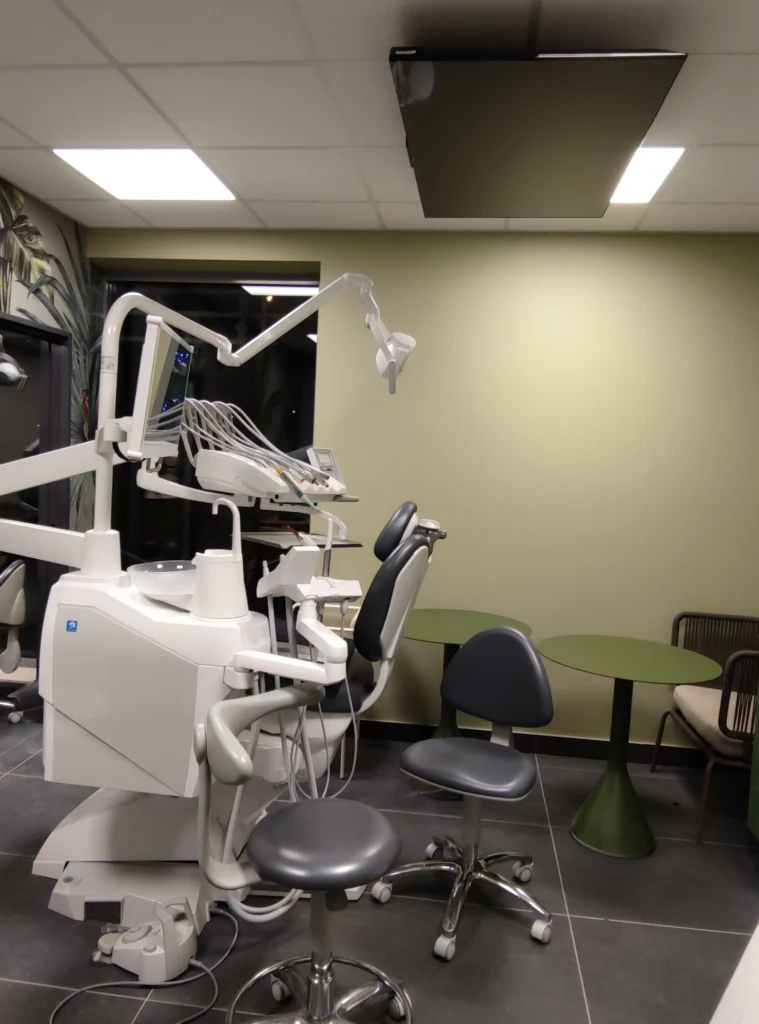
We are proud of our work for the Institute of Physiology and Pathology of Hearing in Kajetany and the European Health Center in Otwock. In such locations, acoustic measurements must be conducted with laboratory precision. We measure not only background noise but also parameters essential for the proper functioning of medical equipment and the comfort of patients undergoing hearing rehabilitation.
Speech Intelligibility in Churches and Sacred Spaces
Sacred spaces are among the most challenging concert halls in the world. High domes, stone walls, and the lack of soft surfaces create echoes that obscure every word. At Tonex, we combine sound reinforcement systems with induction loops and wireless hearing assistance systems so that worshippers hear clear sound regardless of the church’s architecture. Installations in parishes in Bemowo or in the Wieliczka salt mine prove that we can master sound even 130 meters underground.
Accessibility Law: How to Avoid Fines and Build Inclusivity
According to Polish law, every public institution must ensure accessibility for people with special needs. Hearing loops are explicitly listed as one of the solutions that meet this requirement. At Tonex, we not only install the equipment but also provide complete documentation and acoustic measurement protocols. This ensures that your investment is legally compliant and genuinely helps people, rather than just looking good in a report.
Summary: Barrier-Free Sound Is Everyone’s Right
In summary, hearing assistance systems and professional acoustic measurements are an investment in people. In a world that is becoming increasingly noisy, we must ensure that no one is left in the margins of silence. At Tonex, we combine our passion for sound with the latest technology, building bridges between the hearing world and the hearing-impaired community. From universities like UKSW, through prestigious medical institutes, to local churches – everywhere our induction loops restore the joy of communication. Is your building ready for a new era of accessibility?
Everything You Need to Know About Loops and Acoustic Measurements
How can I check if the induction loop is working properly?
For this purpose, we use special test receivers (loop testers) available at Tonex. In addition, every professional installation should be accompanied by a report on acoustic measurements of the magnetic field strength, which guarantees that the signal complies with standards and is free of distortion.
Does an induction loop require a power supply and frequent maintenance?
Yes, the heart of the system is a loop amplifier, which requires a connection to a 230V power supply. However, these systems are designed for continuous operation and are highly reliable. We recommend only an annual inspection and acoustic tests to ensure that the cable has not been damaged, for example, during renovation work.
Can a loop be installed under underfloor heating?
Yes, but it requires a great deal of engineering expertise. Some underfloor heating systems can cause interference or attenuate the magnetic field. At Tonex, we conduct pre-installation tests to select the appropriate amplifier power and compensate for signal loss caused by the reinforcement and pipes in the floor.
Can someone with a cochlear implant also use a hearing loop?
Absolutely! Speech processors for people with cochlear implants almost always have a T-coil. Thanks to the induction loop, sound is transmitted directly to the processor, which dramatically improves speech understanding, especially in noisy environments or large rooms.
How much does it cost to have acoustic measurements taken in a room?
The price depends on the size of the facility and the scope of the testing (whether we are measuring only reverberation time or also the sound insulation of the walls). When planning hearing aid systems, basic measurements are usually part of the project and are crucial to the ultimate success of the installation.
Can an induction loop “leak” outside the room?
With standard loop systems, the magnetic field can be audible even several meters beyond the wall. If privacy is a priority (e.g., a boardroom), we use special low-spill loops that confine the signal strictly within the room’s boundaries.